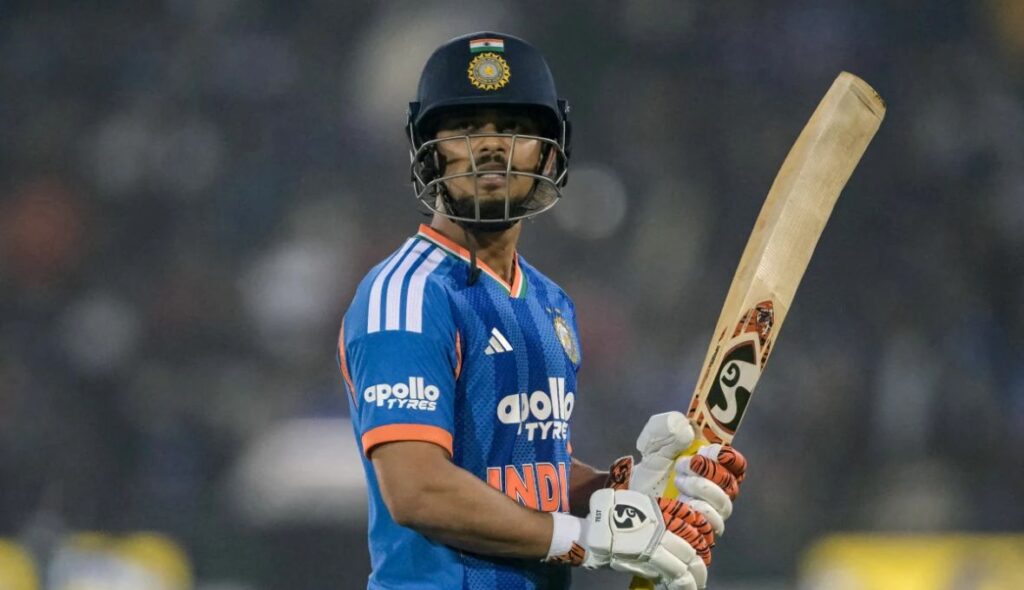

As India and New Zealand gear up for the decisive fifth T20I, speculation around team selection has intensified—particularly regarding the availability and role of Ishan Kishan. With the series showcasing India’s aggressive batting transformation, fans are eager to know whether Kishan will feature in the final match.
India’s batting coach Sitanshu Kotak has now shed light on the team’s mindset, revealing how the presence of aggressive batters like Suryakumar Yadav and Abhishek Sharma has helped India fully embrace a fearless, attacking approach throughout the series.
As the fifth T20I approaches, questions about team balance, form, and strategy dominate discussions—making Kishan’s potential inclusion a key talking point.
India vs New Zealand Fifth T20I: A Crucial Encounter
The fifth T20I between India and New Zealand is more than just another match. It represents the culmination of a series defined by attacking intent, evolving roles, and tactical experimentation.
For India, the series has been about more than results. It has been a test of a new batting philosophy, one that prioritises intent, flexibility, and sustained aggression from ball one.
In this context, player selection becomes a reflection of ideology rather than mere form.
Why Ishan Kishan’s Selection Matters
Ishan Kishan is not just another batter in India’s T20 setup. He represents a specific style—explosive starts, fearless shot-making, and the ability to change games quickly.
What Ishan Kishan Brings To The XI
- Left-handed batting option at the top
- Powerplay dominance
- Ability to unsettle bowlers early
- Experience in high-pressure T20 games
- Aggressive mindset aligned with team strategy
In a format where momentum defines outcomes, Kishan’s skillset makes him a valuable asset—especially in a must-watch fifth T20I.
Sitanshu Kotak’s Comments: A Window Into India’s Strategy
Sitanshu Kotak’s remarks offer clarity into how the Indian team management views batting roles. According to Kotak, the consistent presence of aggressive batters has allowed the team to fully commit to an attacking brand of cricket, rather than oscillating between caution and aggression.
This statement is significant because it suggests that selection decisions are being driven by intent alignment, not just individual performance.
Kotak’s emphasis on aggression indicates that players like Ishan Kishan fit naturally into India’s current blueprint.
India’s Shift Towards Aggressive T20 Batting
India’s T20 approach has undergone a noticeable transformation in recent years. Gone are the days of cautious starts followed by late acceleration. Instead, the team now looks to dominate bowlers early and maintain pressure throughout the innings.
Key Features Of India’s New Batting Philosophy
- High powerplay scoring rates
- Batters backing themselves to clear boundaries
- Reduced fear of early wickets
- Focus on intent over preservation
The success of this approach depends heavily on players who thrive under attacking conditions.
The Role Of Suryakumar Yadav In Shaping India’s Approach
Suryakumar Yadav has become the face of India’s aggressive T20 batting. His ability to score all around the ground, even against quality bowling, has redefined expectations.
His presence at the crease:
- Encourages other batters to attack
- Forces bowlers into defensive plans
- Keeps run rates consistently high
Kotak’s mention of Suryakumar underlines how leadership through batting has influenced team culture.
Abhishek Sharma: The New-Age Aggressor
Abhishek Sharma’s rise adds another dimension to India’s T20 batting. Fearless at the top and willing to take risks, Sharma embodies the aggressive philosophy India is trying to institutionalise.
By combining youth with intent, players like Abhishek allow India to:
- Sustain aggression even after early wickets
- Maintain depth in batting
- Keep bowlers under constant pressure
This makes team selection increasingly about stylistic compatibility.
Where Does Ishan Kishan Fit In This Setup?
Given India’s current approach, Ishan Kishan fits naturally into the system. His aggressive instincts align perfectly with the strategy outlined by Sitanshu Kotak.
However, selection also depends on:
- Team combination
- Balance between left and right-handers
- Recent performances
- Match conditions
The fifth T20I presents an opportunity to reinforce the aggressive template—or tweak it based on situational demands.
Match Conditions And Tactical Considerations
Conditions play a crucial role in T20 selections. Pitch behaviour, boundary size, and dew factor can all influence team composition.
If conditions favour batting:
- Aggressive openers gain more value
- Power hitters become essential
In such scenarios, Kishan’s inclusion becomes more likely.
Competition For Places In India’s T20 XI
India’s biggest challenge is not lack of talent but abundance of options. Every selection decision leaves out a deserving player.
This competition forces the team management to:
- Prioritise roles over reputations
- Reward adaptability
- Back players who suit specific plans
Kishan’s chances hinge on how strongly the management wants to reinforce early aggression.
Series Context: Why The Fifth T20I Matters
Even if the series result is already decided, the fifth T20I holds significance.
For India, it offers:
- A chance to test combinations
- An opportunity to refine roles
- A platform to build confidence
For players like Ishan Kishan, it could be a crucial audition.
Psychological Impact Of Aggressive Batting
Aggressive batting does more than score runs—it changes match dynamics.
Benefits include:
- Putting bowlers on the defensive
- Forcing captains into reactive decisions
- Creating scoring opportunities for non-strikers
Kotak’s comments suggest India values these psychological advantages as much as raw numbers.
How New Zealand Have Responded To India’s Aggression
New Zealand have faced sustained pressure throughout the series due to India’s attacking starts. While they have adapted at times, India’s willingness to keep attacking has often tilted momentum.
This context makes India unlikely to abandon their aggressive blueprint in the final match.
Team Management’s Long-Term Vision
Selection decisions in bilateral series often reflect long-term planning. India’s T20 strategy appears geared towards major tournaments rather than short-term results.
Backing aggressive batters now helps:
- Build confidence
- Establish clarity in roles
- Reduce uncertainty before global events
Ishan Kishan’s involvement would align with this vision.
Fan Expectations And Public Interest
Fans are increasingly drawn to aggressive cricket. High strike rates, boundary-hitting, and fearless play resonate with modern audiences.
Including players like Kishan satisfies not just tactical needs but also fan expectations—an important aspect in contemporary cricket.
Will Ishan Kishan Play The Fifth T20I?
While the final decision rests with the team management, Sitanshu Kotak’s comments strongly suggest that aggressive batters remain central to India’s plans.
Given this philosophy, Ishan Kishan remains a strong contender:
- His style fits the strategy
- His experience adds value
- His presence enhances flexibility
Whether he starts or is used strategically, his role aligns with India’s current direction.
What This Means For India’s T20 Future
India’s evolving batting approach marks a significant shift in mindset. Players are encouraged to express themselves, back their instincts, and embrace risk.
This cultural shift:
- Reduces fear of failure
- Encourages innovation
- Builds resilience
Kishan, Suryakumar, and Abhishek represent this new era.
Lessons From This Series So Far
The India vs New Zealand T20I series has highlighted:
- The importance of intent
- The value of role clarity
- The impact of aggressive mindsets
Kotak’s insights confirm that this is not a temporary experiment but a deliberate strategy.
Conclusion: Aggression Defines India’s Selection Philosophy
As India prepare for the fifth T20I against New Zealand, the question of Ishan Kishan’s inclusion reflects a broader narrative. This series is not just about wins—it is about identity.
Batting coach Sitanshu Kotak’s remarks make it clear that aggression is no longer optional—it is foundational. With players like Ishan Kishan, Suryakumar Yadav, and Abhishek Sharma driving this philosophy, India appear committed to a fearless brand of T20 cricket.
Whether or not Kishan plays the fifth T20I, his skillset embodies the direction India is heading. And that, perhaps, is the most important takeaway from this series.