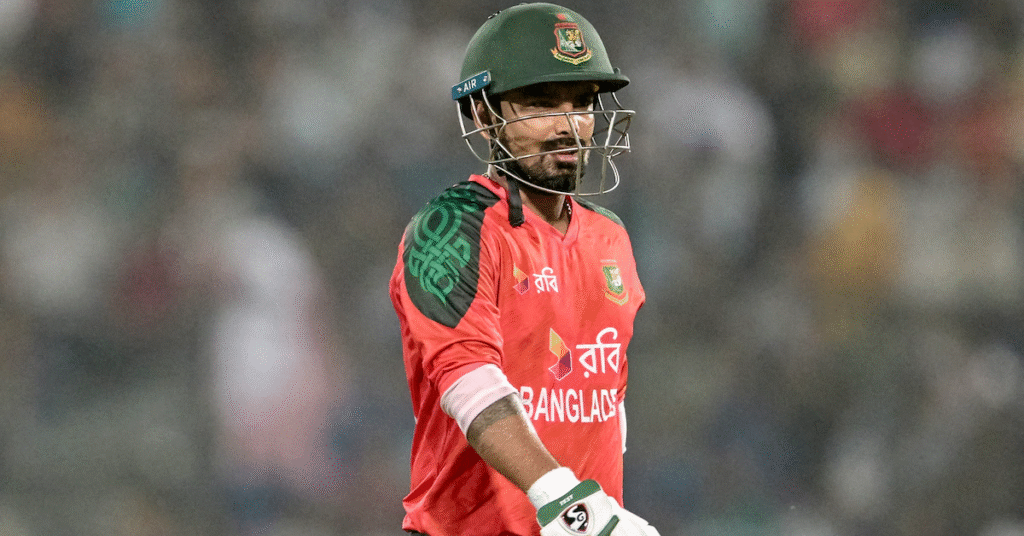

The ongoing controversy surrounding Bangladesh’s participation in the ICC Men’s T20 World Cup 2026 has continued to dominate headlines, but a fresh and important perspective has now emerged from within the Bangladesh camp itself. Litton Das, Bangladesh’s captain and one of the team’s most influential cricketers, has finally broken his silence on the ongoing T20 World Cup row, offering clarity on where the players stand amid the growing tension between the Bangladesh Cricket Board (BCB) and the International Cricket Council (ICC).
Litton Das’s remarks have drawn widespread attention not just because of his leadership role, but also because he has emerged as a calm, unifying voice during a period marked by uncertainty, political undertones, and administrative deadlock. His comments reflect a mature understanding of the situation and underline the importance of keeping cricketing priorities separate from external noise.
This blog explores Litton Das’s statement in depth, the background of the ICC–Bangladesh standoff, the players’ mindset, leadership challenges, and what his words mean for Bangladesh cricket ahead of the T20 World Cup.
Background: The T20 World Cup Controversy Explained
The ICC Men’s T20 World Cup 2026, jointly hosted by India and Sri Lanka, was expected to be a landmark event for global cricket. However, preparations have been overshadowed by a dispute after Bangladesh expressed reluctance to play its scheduled matches in India, citing concerns related to security and broader regional tensions.
Bangladesh was originally allocated several group-stage matches at Indian venues. The BCB later requested that these matches be shifted to Sri Lanka, the tournament’s co-host. The ICC, however, has insisted that the schedule was finalised after extensive planning and that altering venues at this stage would disrupt the competition.
As discussions stalled, the issue escalated into a wider administrative row, with strong opinions emerging from multiple cricket boards.
PCB Support Intensifies the Row
The controversy deepened when the Pakistan Cricket Board (PCB) informed the ICC that it supports Bangladesh’s position. This backing added weight to the BCB’s stance and increased pressure on the ICC to reconsider its approach.
With administrators locked in negotiations, fans and analysts began questioning where the Bangladesh players themselves stood—a question that Litton Das has now answered.
Litton Das: A Leader’s Voice in Uncertain Times
Litton Das has grown into one of Bangladesh’s most dependable batters and leaders in recent years. Known for his composure and professionalism, Litton’s elevation to leadership has been marked by a focus on team unity, discipline, and modern cricketing values.
Breaking his silence on the T20 World Cup row, Litton Das made it clear that players want to play cricket, regardless of the surrounding controversy.
“As players, our job is to prepare, perform, and represent Bangladesh whenever we get the opportunity. Big tournaments like the T20 World Cup mean a lot to every cricketer.”
This statement immediately resonated across the cricketing world, as it shifted attention from politics and administration back to the players’ commitment to the game.
Clarifying the Players’ Stand
Litton Das’s remarks offered rare insight into the dressing room’s mindset. While administrators deliberate, the players remain focused on their cricketing responsibilities.
Key points from Litton’s stance include:
- Players are eager to compete in the T20 World Cup
- Representing Bangladesh remains the top priority
- Uncertainty affects preparation and mental readiness
- Decisions should ideally be taken early for clarity
Importantly, Litton avoided criticism of either the ICC or the BCB, reflecting a measured and responsible leadership approach.
Leadership Beyond the Scorecard
Being captain during a period of administrative uncertainty is no easy task. Litton Das has had to balance:
- Maintaining team morale
- Shielding players from distractions
- Respecting board decisions
- Keeping focus on preparation
His calm public statement demonstrates leadership beyond tactics and performance, highlighting his role as a stabilising figure during turbulent times.
Why Litton Das’s Statement Matters
In cricket, leadership voices often shape narratives. Litton Das’s decision to speak publicly carries significance for several reasons:
- Humanising the Debate
The controversy has largely been discussed in boardrooms. Litton’s comments remind everyone that players’ careers and ambitions are directly affected. - Reducing Speculation
His clarity has countered rumours suggesting player unrest or refusal to participate. - Promoting Unity
The statement reinforces that the team remains united, focused, and professional.
Players’ Mental Preparation Under Threat
T20 cricket demands intense preparation, including:
- Venue-specific practice
- Tactical planning
- Fitness management
- Mental conditioning
Uncertainty around match venues and schedules can disrupt these preparations. Litton Das subtly acknowledged this challenge by emphasising the need for clarity, without directly criticising decision-makers.
Balancing National Policy and Sporting Ambition
International cricket often exists at the intersection of sport and state policy. While boards and governments consider security and diplomacy, players focus on competition and performance.
Litton Das’s statement reflects this reality. He neither dismisses safety concerns nor downplays their importance, but reiterates that players are ready to do their job once decisions are finalised.
Reactions From the Cricketing Community
Former Cricketers
Several former Bangladesh and international cricketers have praised Litton’s maturity, calling his comments:
- Balanced
- Respectful
- Player-focused
- Leadership-driven
Fans
Bangladesh fans have largely welcomed his clarity, expressing hope that the issue is resolved soon so the team can focus on cricket.
Analysts
Cricket analysts view Litton’s remarks as a strategic move to keep players out of controversy while still communicating their position.
Litton Das’s Role in Bangladesh’s T20 Ambitions
Bangladesh enters the 2026 T20 World Cup with growing confidence. The team has:
- Improved depth in batting
- Developed versatile bowling options
- Gained experience in global leagues
As captain, Litton Das plays a central role in shaping this campaign. His focus on cricket over controversy reflects a long-term vision for Bangladesh’s success on the global stage.
Handling Identity and Unity in Leadership
Litton Das’s leadership has also been marked by inclusivity and professionalism. His approach has consistently emphasised:
- Team over individual
- Performance over perception
- Unity over division
By addressing the controversy calmly, he has reinforced these values at a critical moment.
What Happens Next in the T20 World Cup Row?
The ICC is expected to take a final decision after consultations with member boards. Possible outcomes include:
- Venue adjustments
- Hybrid arrangements
- Conditional participation
Regardless of the outcome, Litton Das has made it clear that the players are mentally prepared to play wherever required, once clarity is provided.
Why Player Voices Are Crucial in Modern Cricket
Cricket governance often focuses on regulations and logistics, but player voices bring:
- Perspective
- Accountability
- Emotional context
Litton Das’s comments demonstrate how player leadership can contribute constructively to complex situations without escalating tensions.
Fans Hope for a Cricket-Centric Resolution
Cricket fans across South Asia and beyond hope that the standoff is resolved amicably. The desire is simple: see the best teams compete, without controversy overshadowing the game.
Litton Das’s statement aligns perfectly with that sentiment—play cricket, respect decisions, and move forward.
Conclusion: Calm Leadership in a Stormy Debate
Litton Das breaking his silence on the T20 World Cup row has provided much-needed clarity and balance in an increasingly complex situation. As Bangladesh’s captain, his focus on professionalism, unity, and cricketing commitment stands out.
While administrators and officials continue negotiations, the players’ message is now clear: they are ready to compete, represent their nation, and let their performances speak on the world stage.
In times of uncertainty, such calm leadership not only strengthens a team—but also upholds the true spirit of the game.